
Tag Archive for: population growth

heavy machinery silhouette against sunset_canstockphoto22611529 770x320

Two massive towers are rising in West Palm Beach, reaching 426 feet high to clutch the tile for the city’s tallest high-rises.

They’re just the latest sign of the expansive growth as the downtown lures more businesses and residents.

The 30-story mixed-use complex, titled One West Palm, will contain 326 luxury residential units, 200,000 square feet of Class A office space, a hotel and a long list of amenities, including a fitness club, spa, movie theater and indoor tennis courts.

“These aren’t just the tallest,” One West Palm developer Jeff Greene said. “They’re certainly going to be the iconic landmark buildings in the skyline of West Palm Beach.”
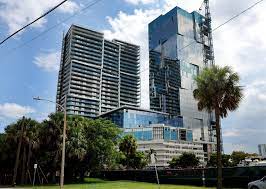
One West Palm sits at 550 N. Quadrille Blvd. in West Palm Beach on Sept. 15. Developer Jeff Greene said the project will be completed some time next year. (PHOTO CREDIT: Carline Jean/South Florida Sun Sentinel)

Residing at 550 N. Quadrille Boulevard, the 426-foot behemoths could fit the length of nearly one-and-half American football fields. They may be the buildings closest to the sky in West Palm Beach, but the project is certainly not the only one in the works.

The “Wall Street of the South” has become a magnet for developers, especially as people migrate from the cities south of it and move from states in the Northeastern United States.

‘The Most Exciting Thing ’

Construction on One West Palm began more than four years ago, and delays pushed completion to 2024, Greene said. But his excitement for the project remains, especially as it will now join other newly developed current and future projects.

“We started out with a kind of out-of-the-way location that really was across from a bunch of boarded-up buildings in Palm Beach,” Greene said. “And now we’re sitting kind of dead center in the middle of the most exciting thing happening in all of South Florida. So it’s really an exciting time for our project.”
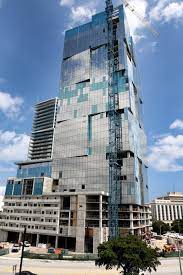
The AKA Hotel is at 695 S Olive Ave. in West Palm Beach, seen here on Sept. 15. This luxury hotel opened last year. (PHOTO CREDIT: Carline Jean/South Florida Sun Sentinel)

Greene said his vision was to create something the city did not yet have. While One West Palm will tout the title of highest buildings in the city, the surge of development in the area has produced several projects, some of which were recently completed, some of which are under construction and some of which were recently approved.

Among those projects are:

  • 360 Rosemary, a nearly 300,000-square-foot office building at 360 S. Rosemary Ave., Suite 1100. This project was completed in 2021.
  • AKA Hotel, a luxury hotel at 695 S. Olive Ave., recently opened last year.
  • One Flagler, a 25-floor Class A-office building with luxury amenities at 154 Lakeview Ave., is under construction.
  • Olara, a luxury waterfront residence at 1919 N. Flagler Drive, is under construction and expected to open in the next few years.
  • NORA, a mixed-use district featuring casual to high-end dining, desserts, coffee shops, boutique fitness spots and retail, will open its first phase in 2024. Its first food and fitness tenants were recently announced.
  • Transit Village, a mixed-use transit-oriented development with residential units planned for 150 Clearwater Drive and 203 S. Tamarind Ave.
  • 515 Fern, a 25-floor mixed-use building expected to become the largest office building in downtown West Palm Beach at 515 Fern St.

Unlocking A Formula

“Those years of great planning and foresight and investment into the city are now bearing fruit by the private sector recognizing that this is a great place,” said Christopher Roog, the executive director for West Palm Beach’s Community Redevelopment Agency. “The growth is occurring in a managed but high-quality way that is benefiting the residents.”

Roog said the city has unlocked a formula for creating places people want to work and live, leaning into the ever-popular ‘Live, Work, Play’ concept so many other cities, such as Boca Raton, are adopting.

“We’re intentionally building our built environment, like our streets and our sidewalks, to make them so comfortable and so inviting that it makes it very easy for that ‘Live, Work, Play’ concept to happen,” Roog said.

“More than 10,000 people now live in downtown West Palm Beach, and even four years ago, the population didn’t hit anywhere close to that,” said Diane G. Papadakos, the city’s director of communications.

“It doesn’t matter where you come from, you can live in the city of West Palm Beach and thrive here,” Roog said.

Growing As A Destination

The flocks of developers, Northeasterners and companies moving to the area is accelerating West Palm’s trajectory, said Jaime Sturgis, the CEO and founder of Native Realty, the real estate firm behind the AKA Hotel and other West Palm Beach projects.

“When a number of these really large funds or private equity groups or even development companies have moved down here, they want to build things that are in their backyard,” Sturgis said. “With all of that wealth that’s migrated down here, there’s also been a tremendous demand to build projects to support the people that are coming. A company coming from Manhattan, for example, is accustomed to state-of-the-art facilities and rental properties to support the company’s workforce.”

For the past 10 to 15 years, West Palm seemingly stalled behind cities such as Miami in “urban core development,” Sturgis said, meaning a lack of construction, new office buildings, retail and multifamily residences.

“The urbanization of formerly industrial neighborhoods, which we’ve seen take off on a massive scale in both Miami and Fort Lauderdale, right through Wynwood and through Flagler Village, has been very successful,” Sturgis said. “And now West Palm is doing that with Nora, which I think is phenomenal. … It really starts to become like a true urban core.”

While not entirely new, the Brightline station in West Palm affords more flexibility for people who live in the city but work elsewhere, Sturgis said. And with more than $70 million in Tri-Rail funds for updated coaches, accessible transportation continues to play an integral role in not only taking people to West Palm Beach to enjoy a night on Clematis Street or a day walking in The Square, but keeping them there and turning them into new residents, too.

Rapid growth, especially when coupled with the arrival of large, successful businesses to an area still coming into its own, could create an environment where standalone spots are swallowed whole by chains. But Sturgis does not feel this threat looms over West Palm Beach or anywhere in South Florida for that matter as he watches communities rally around small businesses.

“We’re still seeing a desire for local and regional tenants,” Sturgis said. “A local coffee shop, or the owner of the local bakery where the husband and wife are working there each day, that sort of thing.”

‘Unique Environment’

Clusters of new buildings popping up in a city are not enough to support people’s desire to visit or stay, no matter how nice they may be. Take it from Jordan Rathlev, a senior vice president of Related Southeast, the real estate company behind West Palm’s 360 Rosemary, One Flagler and 515 Fern.

The ability to cultivate a desired lifestyle, whether that revolves around golfing, beach access, walkable downtowns, outdoor restaurants or all of the above, is an important factor in the decision to move, Rathlev said, which is why Related considers those aspects when deciding where and how they want to move forward with particular developments.

“We start to recognize if people want to come and be successful in South Florida, there’s a lot of critical infrastructure pieces that we’re looking to address because they come to these cities, they expect some of the same amenity base and offering that you would have in some of the other world class cities around the country,” Rathlev said.

West Palm’s planning department, which Rathlev said is “very progressive” in encouraging a variety of architectural types, helps achieve that goal. But the city also remains sensible. Developers aren’t constructing buildings 100 stories in the air, he said.

“I don’t think you will ever see West Palm evolve to the scale and density of a Miami and New York, and frankly, I don’t think we personally want it to,” Rathlev said.


Source: SunSentinel

green pasture with palm trees_canstockphoto16651364 770x320

A little chest thumping never hurt anybody — especially when business is sizzling during inflationary times.

The economic development agency for Palm Beach County made a splash in Times Square in New York City with some targeted advertising. (PHOTO CREDIT: Business Development Board of Palm Beach CountY)

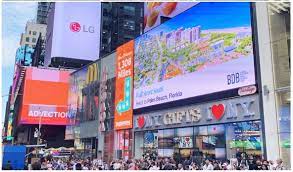
In a case of “strike while the iron is hot,” or perhaps before it turns cold, the Business Development Board of Palm Beach County just took its decade-old “Wall Street South” campaign to midtown Manhattan with the purchase of one-day ads on giant electronic billboards in Times Square and nearby neighborhoods.

“Wall Street South. Head for Palm Beach, Florida,” said one. “Wall Street South. Your Future Is Bright in Palm Beach, FL.” said another.

Fort Lauderdale’s Downtown Development Authority, meanwhile, is circulating a report declaring that its central business district and Flagler Village are generating as much economic activity as Port Everglades and Fort Lauderdale-Hollywood International Airport. For this, think about amounts for each entity that are north of $30 billion a year.

The heads of both agencies are advocates of maintaining hard-earned momentum in a highly competitive economic development game made more difficult by stubborn rising costs for businesses and households.

Kelly Smallridge, president and CEO of the development board, said in an interview that her nonprofit agency caught a deal that was hard to resist: Color ads in three locations for $20,000 — not only for this past Wednesday, but for the forthcoming New Year’s Eve celebration as well.

“This is probably the boldest strategy from an advertising perspective  we’ve engaged in anywhere in Manhattan,” Smallridge said. “I can’t image the hype that’s going to take place when it airs on New Year’s Eve.”

Development board representatives have been visiting New York for years touting the county’s “Wall Street South” campaign, which is designed to persuade executives from financial firms to locate or relocate offices, including headquarters, in Palm Beach County.

Smallridge said her agency was approached by a billboard ad firm and offered a discount rate designed for nonprofit agencies.

“We got very lucky and took advantage of it,” Smallridge said. “We could no way afford the real cost. They approached us to see if we wanted to buy it. They never would have had us on their radar had not been such a big story already. Every time you go to Manhattan, people say, ‘it’s not if we will move, but when.’”

She said the ads appeared at the Times Square Tower, the 43rd Rotunda, and on the “I Love NY” Board at 1530 Broadway,

In a statement, the Business Development Board says that since 2019, it has helped 100 firms open offices in Palm Beach County, which is home to 57 billionaires and 70,000 millionaires. Over the years, the board has even connected headmasters of local schools with company executives to assure them that their children will receive top-notch educations in the county’s schools.

“The 10-year campaign has yielded great results and has certainly boosted our economy in Palm Beach County from Boca Raton to Jupiter,” Smallridge said. “Among those gains: higher salaried jobs, more philanthropic donations to local nonprofits, and companies “run by very smart people. They want to be ingrained in the community,” she said of the newcomers. “None of them has received any financial incentives to move here. We are definitely becoming a finance hub in the Southeastern United States. It’s going to be a continuous effort and we’re not going away any time soon.”

A Surge In Fort Lauderdale

Jenni Morejon, the DDA president and CEO, said the downtown’s growth has its “building blocks” in the wake of the recession triggered by the housing collapse 15 years ago.

But that growth has been gradual with a spike triggered by COVID-19 and a growing desire of out-of-state residents to relocate to places such as Fort Lauderdale,said Morejon.

A report commissioned by the DDA and authored by Walter Duke + Partners, a commercial real estate appraisal firm,  concludes that the downtown area, which is defined as a 2.2-square-mile area that runs north of 17th Street to the central business district, Flagler Village and Sunrise Boulevard, “has an annual economic impact of $35.7 billion, a $6 billion increase from 2019.”

“Clearly, the silver lining to COVID was the 250 residents moving in a month into the downtown core,” Morejon said. “The vibrancy of downtown stayed and people were coming into the office. Businesses saw that and continued to locate here.”

The impact figure rivals Port Everglades and Fort Lauderdale-Hollywood International Airport, the authority says. They combine for more than $105 billion in economic activity such as jobs, generation of tax revenue and business transactions.

“There are 40 new developments “somewhere in the review pipeline, with some approved by a city review committee,” said Morejon. “I think the sustainable growth in downtown Fort Lauderdale is certainly something unique. Not a lot of cities get that. We’ve grown in population about 35% since 2020, a little over 60% since 2018 and almost a complete doubling of population since 2010.”

The downtown area is now roughly 26,000, according to the report.

The DDA, though, has no plans to broadcast highlights of its uplifting report on Times Square billboards. In the past, Visit Lauderdale, the tourism promotion agency for Broward County, has advertised its latest campaigns there.

“I emailed it to all of my peers in public and private leadership roles,” Morejon said. “The message to the private sector is to continue to show how economically successful downtown is and how it’s great place to relocate to. From a political standpoint it can be a real center that can benefit the entire county and region.”


Source: SunSentinel

land_153533913_l-770x320

Over the last few years, Florida has benefitted from tremendous in-migration, which equates to approximately 1,000 people per day moving to the state.

The trend includes not only the movement of individuals, but also employers, capital sources and developers who are expanding into the Florida market. For the first time in 65 years, Florida leads the nation in population growth.

This recent growth has been a catalyst for development, particularly in South Florida, Orlando and Tampa, which are some of the most active development markets in the U.S. In the last few years, development was primarily limited to residential and industrial, but there is renewed interest in office, hotel and retail projects. New residential developments extend beyond traditional multi-housing to build-for-rent communities, senior housing, student housing, affordable housing and manufactured housing.

As a result of the robust development pipeline, developable land is in high demand and selling at record prices. JLL’s Capital Markets team has sold more than $6 billion in land sites over the past 25 years in South Florida, $1.6 billion of which was sold in the last three years alone, demonstrating the sharp uptick in demand. In addition, compared to the broader U.S. market, South Florida / Miami land sales totaled $3.2 billion in 2022, up 49% year-over-year, while the U.S. land sale volume equaled $28 billion, down 10% year-over-year.

Some of the record setting JLL sales include the $363 million sale of 1201 Brickell Bay Dr., which is slated for Citadel’s new headquarters and 700 North Miami Avenue, a 4.7-acre site that sold for $94 million.

“We’ve really seen an uptick in non-traditional real estate owners monetizing their land holdings as well – groups such as schools, religious institutions and non-profits,” said Maurice Habif, Managing Director, JLL Capital Markets. “They see the record setting prices others are getting for their properties and realize they can fund more of their goals and missions by monetizing their land holdings. It’s been really fulfilling working on behalf of the non-profit organizations, and we look forward to seeing this trend continue in the near term. Land is only becoming more and more coveted throughout Florida and that demand should continue for the foreseeable future.”

“Florida really is experiencing phenomenal growth on all fronts,” added Simon Banke, Senior Director, JLL Capital Markets. “With more than 1,000 new residents moving to Florida every day, the state currently leads the country in population growth. Now, for the first time in forty years, Florida boasts more jobs than New York. Investors are acutely aware of these trends and hyper focused on investing in our market. In addition to a wealth of developers and capital providers that are already active in the state, we are speaking with new investors that want to be in Florida on a daily basis.”


Source: MarketScreener

Industrial assets built throughout Florida between 2015 and 2022 have led to record-setting development totals never before seen in the state’s history.

One key measurement of the success of new supply is property stabilization rates. (Assets are considered stabilized once 90 percent of the building is leased.) Over the past five years, Jacksonville and Miami ranked as the top two markets in Florida to stabilize in the shortest period of time. Jacksonville leads the state with an average of 1.6 quarters to stabilize, while Miami trails shortly behind, averaging 2.1 quarters. The Tampa market rounded out the top three with an average of 2.7 quarters.

Florida began preparing for the industrial boom over a decade ago, adding infrastructure growth projects at the ports and rail transportation in preparation for the expansion of the Panama Canal. That, coupled with the unforeseen and expedited rise of e-commerce as a result of the global pandemic starting in 2020, pushed industrial into the spotlight of the commercial real estate industry. Since then, Florida’s robust population growth, coupled with its pro-business and low tax policies, have catapulted record demand, booming development, and limited supply of available industrial space in key markets.

The Buildup Since 2015

Industrial developers have taken advantage of the strong economic benefits. Statewide the leaders in this category include Prologis, McCraney Properties and Flagler Real Estate. Since 2015, Prologis has delivered 36 buildings totaling 7.9 million square feet — the most in the state. Primarily focused on South Florida, the company has achieved 24 deliveries totaling 4.5 million square feet in the region.

Prologis also leads in total acquisitions of industrial properties (in addition to its acquisition of Duke Realty’s portfolio), with Blackstone and McCraney trailing closely behind. Foundry Commercial is another active buyer, with a major focus on the Orlando market. With more 2023 deliveries arriving in the coming months, these buyers will likely continue to scoop properties off the market to add to their investment portfolios.

Florida construction activity also remained strong at the close of 2022, with more than 23.1 million square feet of industrial assets underway throughout the key markets, of which approximately 31 percent is already preleased. The Miami market leads the charge with fully half of its 4.2 million square feet under construction already preleased.

At the end of the fourth quarter of 2022, all Florida markets maintained their high occupancy rates with an average of only 3 percent vacancy across the state. The high level of leasing demand positions Florida as a top contender among the Southeast. Remaining available space under construction continues to be a necessity as limited supply persists and magnifies the need for a large quantity of industrial space to enter the construction pipeline.

Expectations For 2023

Following the records set during the industrial boom, we are entering a more leveled-off market starting in 2023. These slowdowns are no cause for concern and are a natural correction to the abnormal market activity we have experienced over the past few years. Looking ahead, we can expect more leveled-off activity across the state of Florida with slight growth happening in markets such as Miami and Jacksonville.

Jacksonville has been on an upward trend for many years, and the start of 2023 indicates that it should continue. The market is projected to deliver over 8 million square feet of industrial space in 2023, and the current tenant demand indicates that the majority of the new space will be full by the end of the year.  Rental rates will most likely increase as a result, but still be the cheapest option in Florida, making the northeast part of Florida an attractive option.

In Central Florida, tenant demand remains robust despite economic headwinds. Over 14 million square feet of demand from tenants is being tracked, which far exceeds the available supply, indicating that rental rates are likely to rise there as well.

Finally, in the South Florida metro area, scarcity of well-located developable industrial land, strong lease absorption and rent growth statistics, as well as the continued influx of new residents to the state and region, will help ensure the further stabilization and healthy growth of the industrial market.


Source: Commercial Observer

chess_challenge_169627837_s 770x320

There was a whirlwind of real estate deals in 2021 and most of 2022 as billions of dollars flowed toward the purchase or development of South Florida properties.

That steady pace of dealmaking was fueled by an influx of wealthy people, well-paid professionals, and businesses who relocated from other parts of the U.S. to Florida due to its decent weather, low taxes and business-friendly environment.

Today, that migration is still ongoing. However, higher interest rates and growing concerns of a nationwide recession have noticeably cooled South Florida’s red-hot economy. Still, the state’s population continues to grow, which has, in turn, kept the economy humming.

Meanwhile, the tri-county region remains a favored destination for the rich to invest and live in.

To discover about how these trends are affecting South Florida’s residential, office, retail and industrial real estate markets, now and into the future, the South Florida Business Journal gathered a panel of experts for its ninth annual Market Review panel event at the ArtsPark Gallery in Hollywood.

Moderated by Business Journal Real Estate Editor Brian Bandell, the panelists discussed how high interest rates and inflation have affected some property sectors and not others, whether the state’s continued population growth will make it less susceptible to a national recession, and other key topics. The two-hour discussion was sponsored by Berkowitz Pollack Brant Advisors and CPAs, Stiles and the city of Hollywood.

High Interest Rates

The panel launched with experts discussing one of the main drags on the region’s real estate market: higher interest rates.

Noah Breakstone, CEO of Fort Lauderdale-based developer BTI Partners, said interest rates started at 3.25% in January and have climbed to about 7%.

“It’s had a serious impact on purchasing power for single-family home buyers, for condo buyers throughout the market, and we are going to continue to see that effect,” Breakstone said.

Art Lieberman, director of tax services for Miami-based Berkowitz Pollack Brant Advisors + CPAs, agreed, adding that he’d seen a consistent slowdown in property transactions in recent months.

“And there is a good reason for that,” Lieberman said. “Financial leverage is turning either even or upside down.”

The rise in interest rates has created a “bid/ask spread,” in which sellers and buyers are reluctant to compromise on the price of real estate assets. That’s caused transactions to slow down, if not stop altogether.

“A lot of my clients are projecting no property sales for at least three months,” Lieberman said.

As for office deals, they have “come to a screeching halt,” said Brett Reese, managing director of Boca Raton-based CP Group, one of the largest office landlords in Florida.

“Deals we are still trying to make happen involve the seller offering financing … or they have an existing mortgage that we can assume,” Reese said. “Absent that, it is virtually impossible to make the deals work today.”

High interest rates, high capitalization rates and sellers not willing to compromise on price have contributed to the office deal slowdown.

“The other issue we come across is public markets,” Reese said. “The REITs (real estate investment trusts) have traded down or sold off so badly that their valuations are bleeding into the public market a lot faster than private markets.”

High interest rates and cap rates have slowed retail transactions, as well, said Nicole Shiman, senior VP of Edens, a Washington, D.C.-based retail owner and operator. On top of that, consumers nationwide are being squeezed by inflation. Nevertheless, retail has already faced adversity.

“Retail has been experiencing broad-based headwinds for a number of years, with e-commerce and Covid being the most significant stress tests imagined on retail,” Shiman said. “So, retail has fared a lot better than a lot of its piers from an interest rate perspective.”

Michael J. Stellino, senior managing director of development for Elion Partners, a North Miami Beach-based investment management firm that focuses on industrial real estate, said high interest rates have affected its business. But the industrial sector is doing fine.

“The ray of sunshine is that we have seen a lot of interest in the capital markets,” Stellino said. “Pension funds really have shown a positive commitment to industrial. It still feels like this is an asset class that has a long way to go.”

The Trillion-Dollar State

Harvey Daniels, VP of sales for Miami-based Fortune International Group, a broker and developer of high-end condominium projects, said high interest rates have hardly impacted the luxury residential sector. His customers pay cash directly to the developer over a period of four or five years.

“When you are dealing with the ultra-high-end luxury market, it is like, ‘What is a mortgage?’ You just don’t hear about it,” Daniels said.

And his clients are willing to pay record prices for a luxury residence, especially if it comes with an ocean view.

“I have been doing development sales for 30 years in South Florida, and I can tell you there are some of the most expensive projects coming online that South Florida has never seen before,” Daniels said. “Prices per square foot are exceeding $5,000. Somebody just sold something at preconstruction at $7,500 a foot. The reality is, they are coming here and they are buying here. And when that money comes here, the other things come.”

Bandell asked the panelists if the state of the national economy could slow down luxury buying in South Florida.

“Look, I have been hearing this for a long time, but we are in a bubble,” Daniels said. “We go up high and we go low fast. It is what it is.”

With 800 people a day moving to Florida, the state will continue to prosper, Berkowitz Pollack Brant’s Lieberman said.

“They have to live somewhere and work somewhere and play somewhere,” Lieberman said. “So … there is going to have to be increased building.”

In 2020 and 2021, more money migrated to Florida — about $24 billion — than any other state in the U.S., Edens’ Shiman said.

“Texas is next on the list, and they had $6 billion,” Shiman added. “We are talking about three or four times more than anywhere else in the country. And retail is in a great position to capture much of that cash flow. If you have significant wealth migration, you have more consumers with disposable income who can spend and that really drives retail sales, And once you drive retail sales, that is the opportunity to drive retail rents.”

The office sector has certainly benefited from the wealth influx, especially among companies entering the market for the first time, CP Group’s Reese said.

“For the last few years, the momentum on the leasing front has been unlike anything the state has experienced before,” Reese said. “Historically, maybe there was 250,000 square feet or so of new-to-market tenants coming in. Since Covid, it has been 2 million square feet and, if you were to look at who that is, it is every household hedge fund, private equity, bank, technology firm. They all established a presence in South Florida.”

Those new companies want Class A office space, and they are willing to shell out top dollar for it.

“There is no cap on what the top hedge funds or banks are willing to pay. The comps we are getting in West Palm for the best-quality space are three or four times higher than the highest rent ever achieved in South Florida,” Reese said. “What people are paying in rent per square foot is what we are buying buildings for per square foot.”

The influx of people and business has enhanced the demand for industrial, too, Elion Partners’ Stellino said.

“Those people are still shopping. They are still buying things,” Stellino said. “And where does all that product get stored before it goes to the retailer? Before it goes to the condominium? It all flows through the warehouse.”

Increasingly Unaffordable

The luxury market is performing well because South Florida is a historically proven safe harbor, both domestically and internationally, BTI Partners’ Breakstone said.

“Look at what is happening in Brazil, Colombia, Peru, Russia,” Breakstone said. “People want to keep their money here.”

But while the influx in cash has helped the commercial real estate sector, it hasn’t made it easier for the average income earner to afford to live here. Not only are most homes out of reach thanks to high interest rates, but rents are increasingly unaffordable, Breakstone said

“People who are medium income, they’re using over 50% of their earnings to live here and it’s getting even more costly,” Breakstone said.

Even local residents who bought early have a predicament.

“If you live in a place that you own, it’s great what you can sell it for,” Breakstone said. “But what are you going to buy?”

Higher interest rates and labor costs have made it much more expensive to build, too. And with less supply, there will be higher housing costs, taking the housing affordability issue from bad to worse, Breakstone said.

“I think Miami is on the track to be another New York, just with a better tax environment, superior weather, easier access and a lot of other dynamics,” Breakstone said. “But affordability is going to be a substantial challenge. I don’t think that is going to go away and there is going to have to be more creative solutions.”

The attraction of a skilled workforce is what South Florida needs to attract large tech companies such as Google, Reese said.

“South Florida in general is a place a lot of students want to move to, but it’s extraordinarily expensive,” Reese added, “So offering more affordable housing options is going to be critically important to attract that talent, and having that talent will spur more growth with employers.”

Future Trends

South Florida has likely already seen its biggest lease deals in the present real estate cycle, Reese said, so a “cooling off period” seems imminent. Transactions for office buildings, on the other hand, will probably heat up as the substantial mortgages that landlords took out over the years come due.

“We are at this standstill where somebody has to blink and … the first guy to blink is going to be the seller,” Reese said.

Retail landlords will generally do well in South Florida, thanks to the influx of cash and a shortage of available retail space, Edens’ Shiman said.

Industrial is also set to prosper, especially since developers and retailers are still hoarding items and materials after dealing with supply chain issues last year.

“They realize they are losing customers if they don’t have items on the store shelves,” Elion Partners’ Stellino said. “So, they keep that inventory here, where they can control it. That means builders and distributors now keep the raw materials they need in warehouses here instead of offshore and abroad, in case there’s another hiccup in the supply chain.”

Yet, there’s only so much space where new industrial can be built, leading logistics developers to consider new approaches.

Stellino said local industrial developers could replace Class B and Class C office buildings with newer Class A industrial, since they’re often in major markets.

Breakstone said there’s so much uncertainty in the market, he’s stopped trying to predict the future. He just makes sure he’s nimble enough to react to the “crosswinds that are happening.”

“South Florida is a micro-economy that does not follow national trends,” said Berkowitz Pollack Brant’s Lieberman. “We have booms when no one else does, And we have busts when no one else does.”

And Florida is unique in another aspect: Many of the people moving their residences and companies to the Sunshine State are attracted by its center-right politics.

“People are moving here for political reasons,” Lieberman said. “As long as there is a political imbalance between the north and the south, I think you will see the continued increase in population.”


Source: SFBJ

construction_crane with sunset in background 8269062_s 770x320

The Pompano Beach City Commission recently approved a change to the city’s zoning code to incentivize well-designed mixed-use and mixed-income developments along the Dixie Highway corridor and along other specific commercial corridors within Pompano Beach.

The initiative began at the Pompano Beach Planning and Zoning Board meeting in February 2021, when Chair Fred Stacer started a discussion related to the city’s interest in beautifying the Dixie Highway corridor following the city’s investments in the roadway itself through the G.O. Bond program.

Stacer said the expectation of quality design for new development should increase. This discussion evolved into the creation of a Dixie Highway Task Force by the chair of the city’s economic development council, Tom DiGiorgio. Stacer was appointed as chair of the task force. The task force adopted the goal of creating mixed-income and mixed-use regulations for Dixie Highway, and ultimately, for all applicable commercial corridors of the city, with additional requirements and incentives in those areas where combatting poverty has been identified as a priority.

According to a study conducted on behalf of the city by the Lambert Advisory Group, Pompano Beach has the highest number of income-restricted housing units in the county (2,140 units), followed by Fort Lauderdale (1,941 units).

Additionally, Pompano Beach has the third-highest proportionate share of income-restricted units to non-income-restricted units in the County — for every 25 residential units in Pompano Beach, one unit is income-restricted. A large proportion of income-restricted units are being developed in census tracts where there is already a high concentration of existing rent-restricted or subsidized units.

The new change to the city’s code uses criteria set forth in the affordable housing incentive policy that Broward County adopted in March 2021. It also integrates the mixed-income housing policy the city adopted in December 2021 to encourage affordable housing and provide relief from the adverse impacts of the concentration of income-restricted housing within Pompano Beach.

The County’s policy allows additional density (more dwelling units per acre) in residential land use categories and unlimited density in “Commerce” and “Activity Center” land use categories for projects on eligible roadways that include affordable housing.

The city’s new mixed-income housing policy intends to be more restrictive than the County’s policy: A minimum of 50% non-income-restricted residential units will be required in residential developments that are within a half-mile radius of an income-restricted residential development project.

Density for properties with a B-3 Commercial zoning, which is predominant along the commercial corridors, will be regulated by the city’s zoning code. Along Dixie Highway (between city limits) and North Powerline Road (between Atlantic Boulevard and NW 15th Street), a minimum of 80% non-income-restricted residential units will be required. The city would provide a minimum 50% density bonus as an additional incentive to redevelop those properties inclusive of the non-income-restricted units.

The new regulations also set design standards that must be maintained by all development along these commercial corridors, including light industrial uses such as warehouses, which are permitted along corridors like Dixie Highway. In addition, a screening requirement was added for visible parking garage façades, as recommended by Stacer.

In addition to Dixie Highway and Powerline Road, the eligible commercial corridors within the ­­­­­­city where the new regulations can be applied include Federal Highway, Sample Road, Copans Road, NW 31st Avenue, Atlantic Boulevard and McNab Road west of Dixie Highway, a portion of Andrews Avenue, and the western portion of MLK Boulevard.

Only properties that have a Commercial land use designation and are abutting those corridors will be eligible to receive residential entitlements through the County’s policy.

Speaking to the City Commission at its March 22 meeting, Stacer said he talked extensively with the redevelopment team of John Knox Village to make sure the three blocks that abut Dixie Highway from SW 3rd Street to SW 6th Street were properly integrated into the city’s new policy for the commercial corridors, as well as the desires of John Knox Village.

 “The new policy is probably going to be cutting edge for the county,” Stacer told the Commission.

Deerfield Beach city officials have taken interest in it, and in the future, there may be opportunities for Pompano to coordinate with them regarding what happens on the Dixie Highway corridor, said Stacer.

Stacer noted that the new guidelines will bring the city’s corridors into the 21st century design criteria, and will help protect single-family residences from the “massive amount of pressure” the city is going to experience due to an increase in population.

“This sets the stage for years to come,” said Mayor Rex Hardin. “It’s not going to transform any roadway today, but this will help guide development in the future for many, many years.”


Source: Point!Publishing


breaking ground_shovel_52035638_s

First Industrial Realty Trust has broken ground on the first phase of a warehouse project near Interstate 95 in Pompano Beach.

First 95 Distribution Center will be on 8.4 acres at 1200 N.W. 15th St., which is just north of Atlantic Boulevard. It aims to complete the 141,000-square-foot warehouse with 36-foot clear height in the third quarter of 2021. The Chicago-based developer (NYSE: FR) is investing about $22 million in the project.

The leasing brokers for the spec project are Larry GenetTom O’Loughlin, Jake Zebede and Lana Horton of CBRE.


Click here to read more about this story.