
Tag Archive for: avison young report

manufacturing_canstockphoto6100225

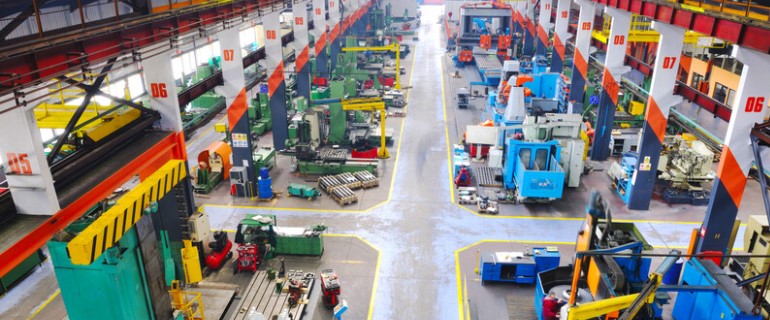
Among the harsh lessons the pandemic taught industries is that relying on thinly sourced supply chains, particularly for manufactured goods, can be a mistake.

Something coming from that experience is a degree of reshoring manufacturing—bringing it back to the U.S., as Avison Young notes.

The push has been growing for “several years … with 1.3 million manufacturing jobs brought back to the U.S. since 2010.” Manufacturing grew by 21.6%, according to the Census Bureau, and new manufacturing facilities construction was up 116%. The reason is to diversify supply chains.

“Many companies are investing in domestic facilities based on lessons learned during the pandemic, as product shortages disrupted their business flow,” the firm wrote. “Recent intense pandemic lockdowns in China took many businesses by surprise and threw another jolt into the already disruptive supply chain. By locating facilities in the U.S., they can mitigate risk and gain more control over the production, quality and distribution of their products.”

Technology companies have been leaders in the push to reshore manufacturing. Examples are multi-billion-dollar chip plants, thanks to the $52 billion CHIPS and Science Act that was part of the Inflation Reduction Act.

The shift isn’t only the province of giant companies like Intel, Samsung, and TSMC.

“Many small- to mid-sized companies are also reshoring or expanding domestic manufacturing,” said the report. “Aside from the supply chain benefits, companies are also trying to work around skyrocketing shipping costs and other transportation costs. And, geopolitical issues related to China are prompting some companies to reduce their reliance on those foreign labor ties.”

With the increase of manufacturing facilities comes a boost to warehousing, because factories need storage and distribution space, as do tiers of suppliers to these manufacturers and potentially distributors.

“Despite the higher labor costs of operating in the U.S., it can be more cost-effective to manufacture products closer to the customer base, when reduced shipping and distribution costs are factored in,” the analysis noted.

An additional benefit that experts in supply chain and manufacturing logistics have noted for at least 20 years is shortening that by shortening the distance to a customer base, a company can react more quickly to changes in the market. Having factories in Asia and then shipping goods by sea leaves 30 to 60 days of inventory in transit, setting an effective time barrier on how quickly updates, design modifications, or error corrections can be incorporated.


Source: GlobeSt.
 

Festival Flea Market 770x320

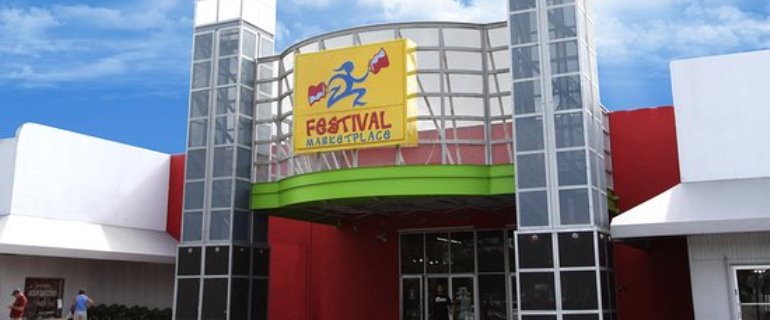
A developer and warehouse operator won approval from the Pompano Beach City Commission to replace the Festival Flea Market Mall with about 470,000 square feet of warehouse space.

North Miami-based IMC Equity, led by owner and CEO Yorham Izhak, is working with Atlanta-based IDI Logistics to demolish the Festival Flea Market Mall on the southeast corner of the Florida Turnpike and Sample Road, and redevelop the site as a warehouse complex with a 412,347-square-foot building and a 58,962-square-foot building.

The Pompano Beach City Commission just voted to rezone from “general business” (B-3) to “general industrial” (I-1) a 23.8-acre portion of the 37-acre Festival Flea Market site. The rest of the site, which is at the corner of Sample Road and Northwest 27 Avenue, remains a commercial outparcel for a proposed Racetrac Gas Station and Market.

The city commission also approved a text amendment and a map amendment to the local land use plan for the Festival Flea Market property. IDI Logistics filed the application for the land-use amendments, and a company controlled by IMC Equity applied for the rezoning.

In 2018, IMC Equity paid $25 million to acquire the Festival Flea Market Mall at 2900 West Sample Road and another $31 million for the mall business itself. The flea market rents space to tenants that sell apparel, shoes, bags, luggage, jewelry, and electronics, among other types of goods.

“It will be at least a year before the tenants would have to leave,” Dennis Mele, an attorney for IMC Equity, said at a June 14 meeting of city commissioners, who voted then to table their consideration of the warehouse project.

Mele said the Festival Flea Market project will be the fourth warehouse development that IDI Logistics has pursued in Pompano Beach. The Atlanta-based company owns and operates the Pompano M Business Center, the Pompano II Business Center, and the Rock Lake Business Center, which is just south of the Festival Flea Market Mall.

Commissioner Beverly Perkins said after the Festival Flea Market Mall is demolished, the city should assist tenants of the mall, including some who have leased space there for more than 20 years.

The trend toward online shopping, which the pandemic strengthened, is driving the industrial redevelopment of the Festival Flea Market Mall, according to the rezoning application filed by IMC Equity. The location of the mall also allows fast access to the Turnpike, I-95 and the Sawgrass Expressway.

“The impacts of COVID-19 will likely impact the way people shop well into the future, which will continue to reduce the need for brick-and-mortar stores as people continue to do much of their shopping online,” according to the rezoning application.

Industrial vacancy in Broward County plunged to 4.7 percent in the first quarter from 8.7 percent during the same period of last year, as tenants absorbed new warehouses and other types of industrial property, according to a report by Avison Young. The vacancy rate in the first quarter was 4.1 percent in Pompano Beach, which has 29.6 million square feet of industrial space, the largest inventory among seven sub-markets in Broward County, Avison Young reported. Industrial space under construction in the first quarter totaled 285,176 square feet in Pompano Beach, nearly 600,000 square feet in southeast Broward, and 1.6 million square feet county-wide, according to Avison Young.

Broward County had a 4.2 percent industrial vacancy rate in the first quarter, compared with 2.6 percent in Miami-Dade County and 4.5 percent in Palm Beach County, according to industrial market research by JLL.


Source: The Real Deal